Product Design Services
End-to-end design of digital products — from the first research session to a design system your engineers can build from.
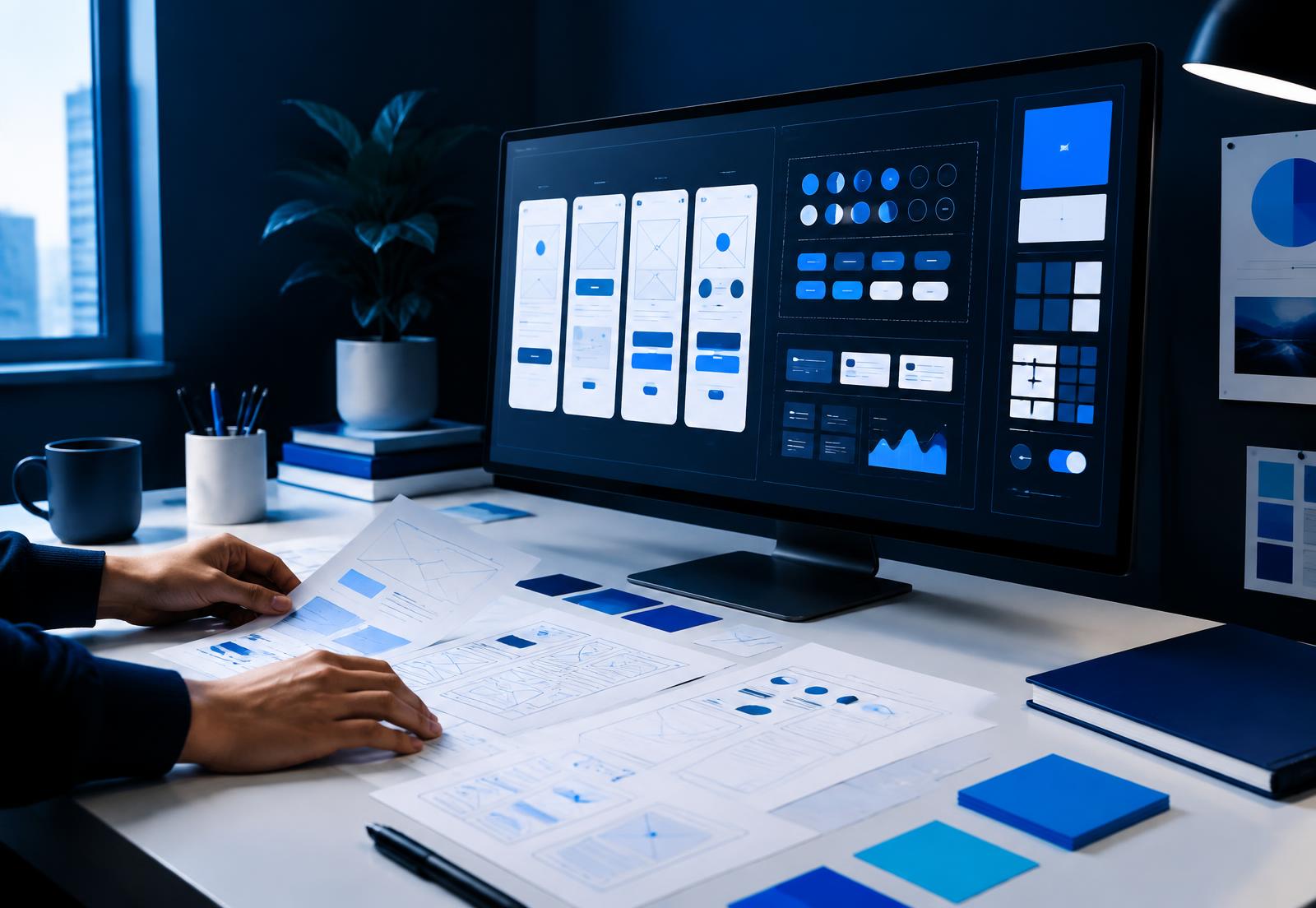
Research → frame → prototype → validate
What is product design?
Product design is the discipline of shaping a digital product so that it solves a real user problem in a way that is usable, coherent and commercially viable. It spans user research, information architecture, interaction design, interface design and validation, and it produces more than screens: a design system, documented patterns, defined states and edge cases, and evidence that the chosen approach works. Product design differs from visual design in that its output is judged by whether users complete tasks, not by how the screens look in isolation.
Scope
What product design includes
Discovery: stakeholder interviews, user research and competitive analysis
Information architecture, user flows and content structure
Wireframes and interaction design covering every state and edge case
High-fidelity interface design in a reusable component system
Interactive prototypes validated with real users before build
Developer handover: specifications, assets, tokens and documentation
Why it pays
Design decisions are cheapest early
A flow reworked in Figma costs hours. The same rework after engineering has built it costs sprints, and after launch it costs customers.
Product design front-loads the expensive decisions — structure, flow and scope — into the phase where changing your mind is nearly free.
Continue exploring
Related design services
UI/UX Design
Research-led user journeys and clear interfaces for web and mobile products.
EXPLORE / 02UX Research
Evidence about your users before you spend a sprint guessing.
EXPLORE / 03Prototyping
Interactive prototypes that test an idea before it's engineered.
EXPLORE / 04Interactive Design
Interfaces, states and micro-interactions that feel considered.
EXPLORE / 05Motion Design
Animation and motion that explains, guides and delights.
EXPLORE / 06Graphic Design
Brand, identity and visual assets across every channel.
Useful answers
Questions,
clarified.
A product designer researches users, defines flows and structure, designs the interface and its states, prototypes and tests the result, then documents it for engineering. The role spans UX and UI rather than sitting in one.
A focused feature or flow typically takes two to four weeks. A full product design programme with research, system and validation usually runs two to four months depending on scope.
Yes. Where a system exists we extend it rather than replace it; where it's inconsistent we consolidate it as part of the work.
Figma files organised for development, a component library with tokens, documented flows and states, prototypes, research findings, and a written handover.
Yes, and we'll argue for a smaller one than you planned. MVP design is about identifying the single flow that proves the hypothesis and designing it properly rather than designing ten flows shallowly.
Next signal
Turn uncertainty into a clear plan.
Tell us what you are building and where quality or design is slowing you down.
Start a conversation