Interactive Design Services
Every state, every transition, every piece of feedback — designed, not left to chance in implementation.
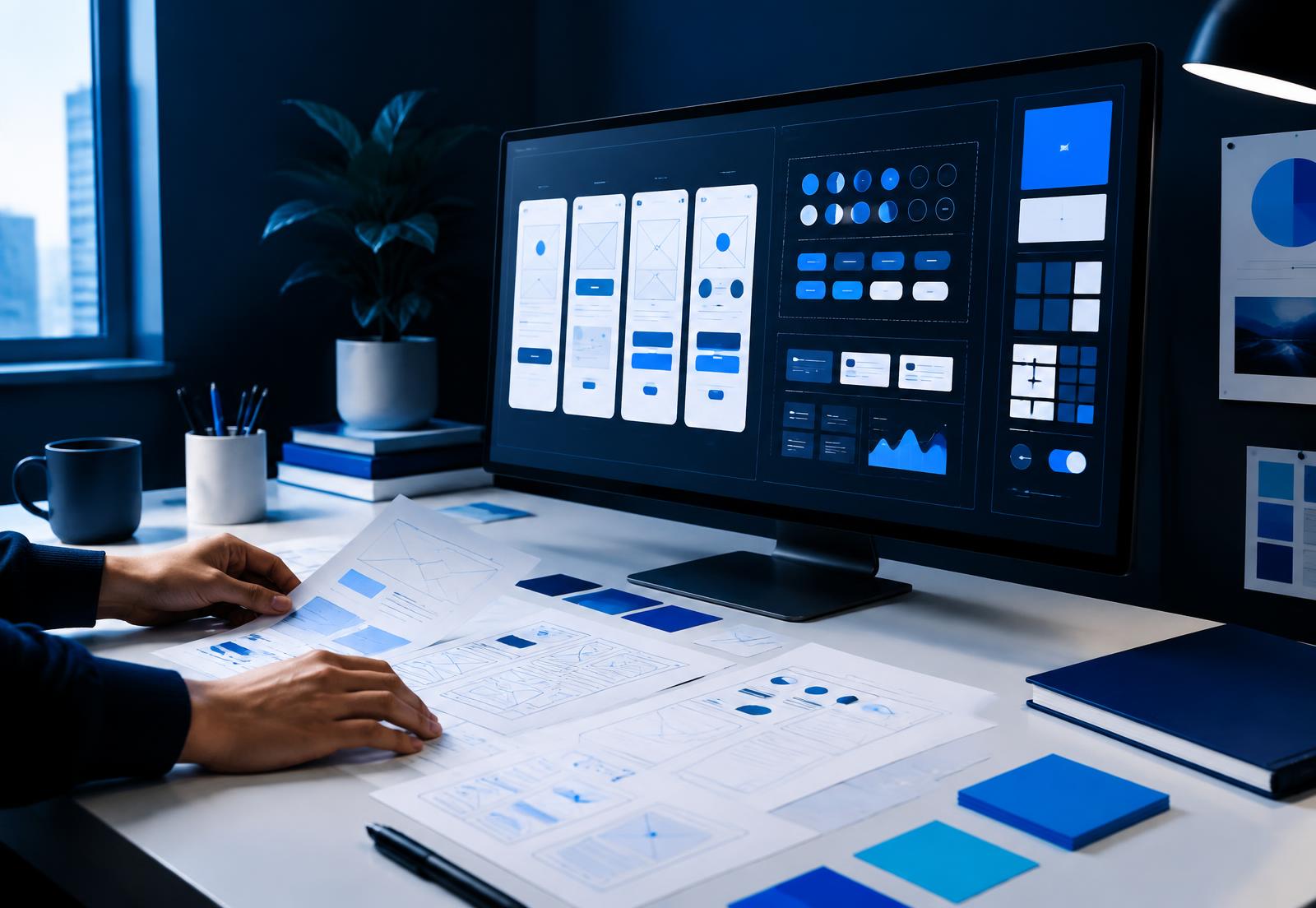
Research → frame → prototype → validate
What is interaction design?
Interaction design is the design of how a product responds to the people using it: what happens on hover, tap, drag, error and success; how loading and empty states behave; how feedback confirms that an action worked. It is the layer that decides whether an interface feels responsive and trustworthy or unpredictable and slow. Interaction design covers the complete state model of every component and flow — not just the ideal screen, but the loading, empty, partial, error and success versions that users meet in real use.
Scope
What we design beyond the happy path
Complete state models: default, hover, focus, active, loading, empty, error, success
Micro-interactions and feedback that confirm actions without interrupting flow
Transitions and spatial continuity so users never lose their place
Form behaviour: inline validation, error recovery, progressive disclosure
Perceived-performance patterns — skeletons, optimistic updates, progressive loading
Gesture, keyboard and pointer parity across desktop, tablet and mobile
Why it matters
Interaction quality is what users call 'polish'
Users rarely describe an interface as having good interaction design. They describe it as fast, or obvious, or 'just working' — and they describe the absence of it as clunky.
Because we also test software, our interaction specifications are written to be verifiable: each state has an expected behaviour that can be checked in QA rather than argued about in review.
Continue exploring
Related design services
UI/UX Design
Research-led user journeys and clear interfaces for web and mobile products.
EXPLORE / 02Product Design
End-to-end design of digital products, from concept to shipped interface.
EXPLORE / 03UX Research
Evidence about your users before you spend a sprint guessing.
EXPLORE / 04Prototyping
Interactive prototypes that test an idea before it's engineered.
EXPLORE / 05Motion Design
Animation and motion that explains, guides and delights.
EXPLORE / 06Graphic Design
Brand, identity and visual assets across every channel.
Useful answers
Questions,
clarified.
Interaction design defines how an interface responds to user input — states, feedback, transitions and error handling — so that the product feels predictable, responsive and clear.
UI design determines what the interface looks like at rest. Interaction design determines how it behaves over time and in response to input, including all the non-ideal states.
Yes. Durations, easing curves, trigger conditions and reduced-motion fallbacks are all specified in handover so implementation matches intent.
Always. Every motion specification includes a prefers-reduced-motion alternative, because vestibular sensitivity is common and unaccommodated animation can genuinely make people unwell.
Yes — an interaction audit of your current states and feedback usually finds a large set of low-effort, high-impact fixes before any redesign is needed.
Next signal
Turn uncertainty into a clear plan.
Tell us what you are building and where quality or design is slowing you down.
Start a conversation