Accessibility Design Services
Inclusive interfaces designed to WCAG 2.2 from the first sketch, because retrofitting accessibility costs several times more than designing it in.
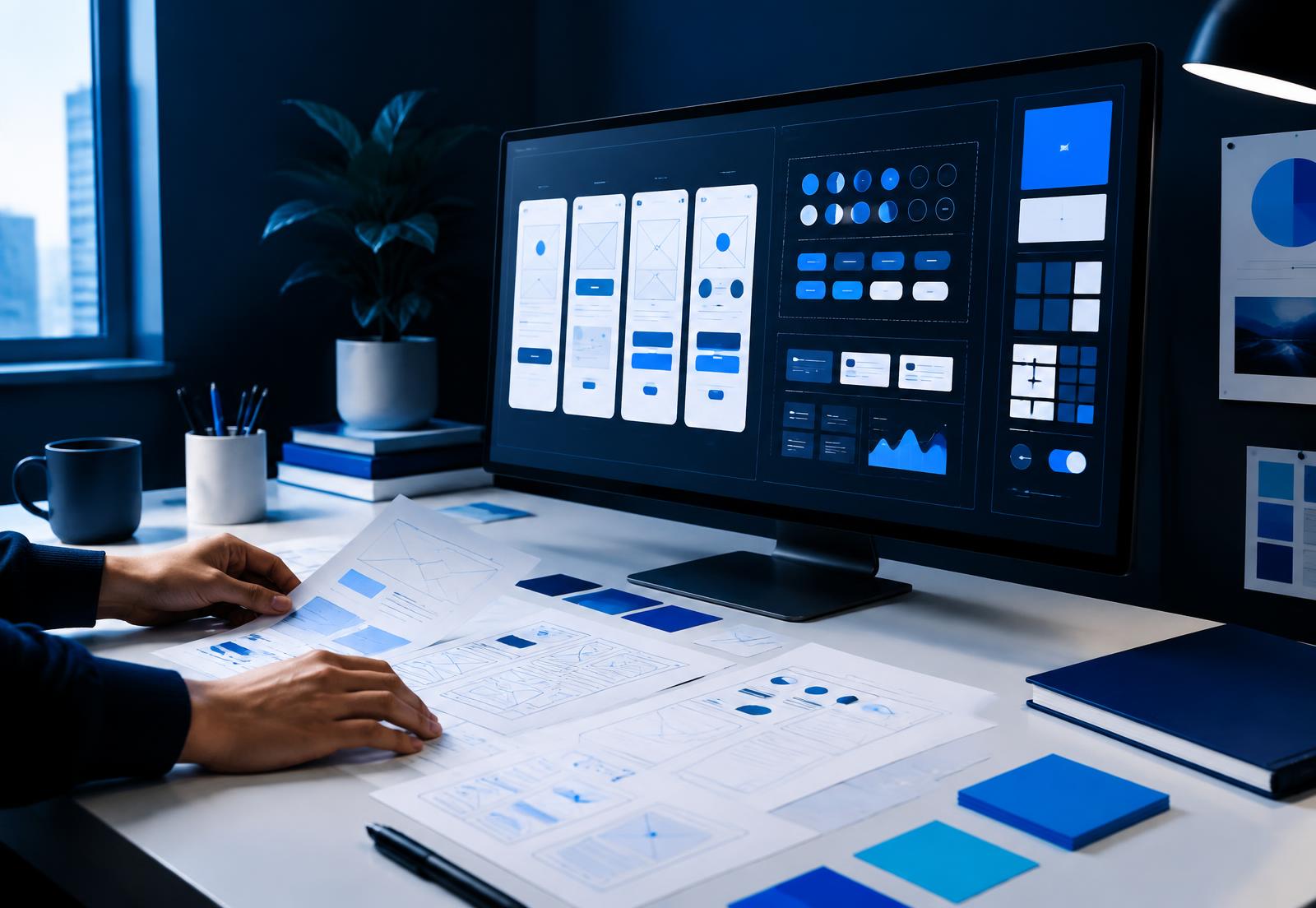
Research → frame → prototype → validate
What is accessibility design?
Accessibility design, also called inclusive design, is the practice of designing interfaces that work for people with disabilities from the outset rather than remediating them afterwards. It covers colour contrast and non-colour indicators, readable typography and reflow, visible focus states and logical focus order, accessible form and error patterns, meaningful alternative text, and components that expose the right semantics to screen readers. Designing accessibly is substantially cheaper than fixing an inaccessible product, and it produces interfaces that are measurably clearer for everyone.
Scope
Accessibility built into the design itself
Colour systems that meet WCAG 2.2 AA contrast without flattening the brand
Focus states and focus order specified for every interactive component
Typography, spacing and reflow that survive 200% text zoom and 400% page zoom
Accessible form patterns: labels, instructions, inline validation and error recovery
Component semantics and ARIA specified for developers, not improvised later
Alternative text, captions and transcript standards for media
Reduced-motion alternatives for every animation
Remediation
Fixing an inaccessible product
When an audit has already found problems, we design the fixes: a revised colour palette that keeps brand recognition while passing contrast, redesigned components with proper semantics, and clearer error and navigation patterns.
Our accessibility testing team then verifies the implementation with screen readers and keyboard-only testing, so the fix is confirmed rather than claimed.
Continue exploring
Related design services
UI/UX Design
Research-led user journeys and clear interfaces for web and mobile products.
EXPLORE / 02Product Design
End-to-end design of digital products, from concept to shipped interface.
EXPLORE / 03UX Research
Evidence about your users before you spend a sprint guessing.
EXPLORE / 04Prototyping
Interactive prototypes that test an idea before it's engineered.
EXPLORE / 05Interactive Design
Interfaces, states and micro-interactions that feel considered.
EXPLORE / 06Motion Design
Animation and motion that explains, guides and delights.
Useful answers
Questions,
clarified.
Accessible design creates interfaces usable by people with disabilities by building contrast, focus, semantics, readable structure and assistive-technology support into the design from the start, targeting standards such as WCAG 2.2 Level AA.
Designing accessibly adds little to a new project. Retrofitting accessibility into a shipped product typically costs several times more, because it touches components, content and code that are already built and tested.
No. It constrains a few specific decisions — contrast ratios, focus visibility, motion alternatives — and those constraints usually improve clarity. Plenty of striking, distinctive interfaces are fully conformant.
Design prevents barriers; testing verifies that none were introduced in implementation. We do both, which means findings feed straight back into the design system.
WCAG 2.2 Level AA by default, with Section 508 and ADA considerations for US organisations, and AAA criteria applied selectively where they matter for your audience.
Next signal
Turn uncertainty into a clear plan.
Tell us what you are building and where quality or design is slowing you down.
Start a conversation